
Aquaculture
AQUACULTURE IN CONNECTICUT
What is Aquaculture?
Aquaculture in Connecticut is defined as the farming, cultivation, or controlled harvesting of marine organisms such as fish, shellfish, and aquatic plants by individuals or commercial entities. In Connecticut, aquaculture activities are regulated under both state and federal law to ensure the sustainable use of marine resources.
Connecticut’s coastal waters are governed in part by the Public Trust Doctrine, which holds that submerged lands and navigable waters are owned by the state in trust for public use, including fishing, navigation, and recreation. Because of this, aquaculture operations in Connecticut require strict oversight and permitting.
The Connecticut Department of Agriculture’s Bureau of Aquaculture is the primary regulatory authority for shellfish and aquaculture activities, ensuring environmental protection, public access rights, and food safety standards. Aquaculture projects often require coordination with the Connecticut Department of Energy and Environmental Protection (DEEP), the Army Corps of Engineers, and local harbor management commissions to comply with environmental regulations, water use standards, and harbor ordinances.
HELPFUL LINKS
Shellfish Sanitation Program
Laboratory Services
Shellfish Area Classifications and Maps
Harmful Algal Bloom Monitoring
Vibrio Management | Vibrio Frequently Asked Questions
Oyster & Clam Disease Surveillance and Fact Sheets
Shellfish/seed Importation Policy
Related Links | Definitions and FAQs
Shellfish Industry
Applications, Forms, and Licenses
Shellfish Industry Profile and Economic Impact
Shellfish Bed Types and Management
HACCP Information and Forms
Regulatory Guidance
Industry Meeting Presentations
New Industry Opportunities
Opportunities for New Aquaculture Businesses
Branford Aquaculture Initiative
Shellfish Ground Leasing Procedure and Lease Opportunities
Aquaculture
Environmental Benefits of Shellfish & Shellfish Aquaculture Aquaculture Permit Requirements
Operational Plans for aquaculture gear for seed in prohibited areas and determined to attract birds
What is aquaculture?
Seaweed Producers and Aquaculture
Recreational Shellfishing
General Information about Recreational Shellfishing
Shellfish Handling and Safety Guidance
Recreational Shellfish Growing Area Contacts, Hotlines, and Maps
Shellfish Commission Guidance
Seed importation and relay license applications
To report illegal harvesting, call DEEP Dispatch toll-free at 800-842-HELP (800-842-4357)
Shellfish Rehabilitation and Enhancement
Policy for Shellfish Enhancement and Restoration Projects
Connecticut Shellfish Restoration Guide
Shellfish Rehabilitation and Enhancement Projects
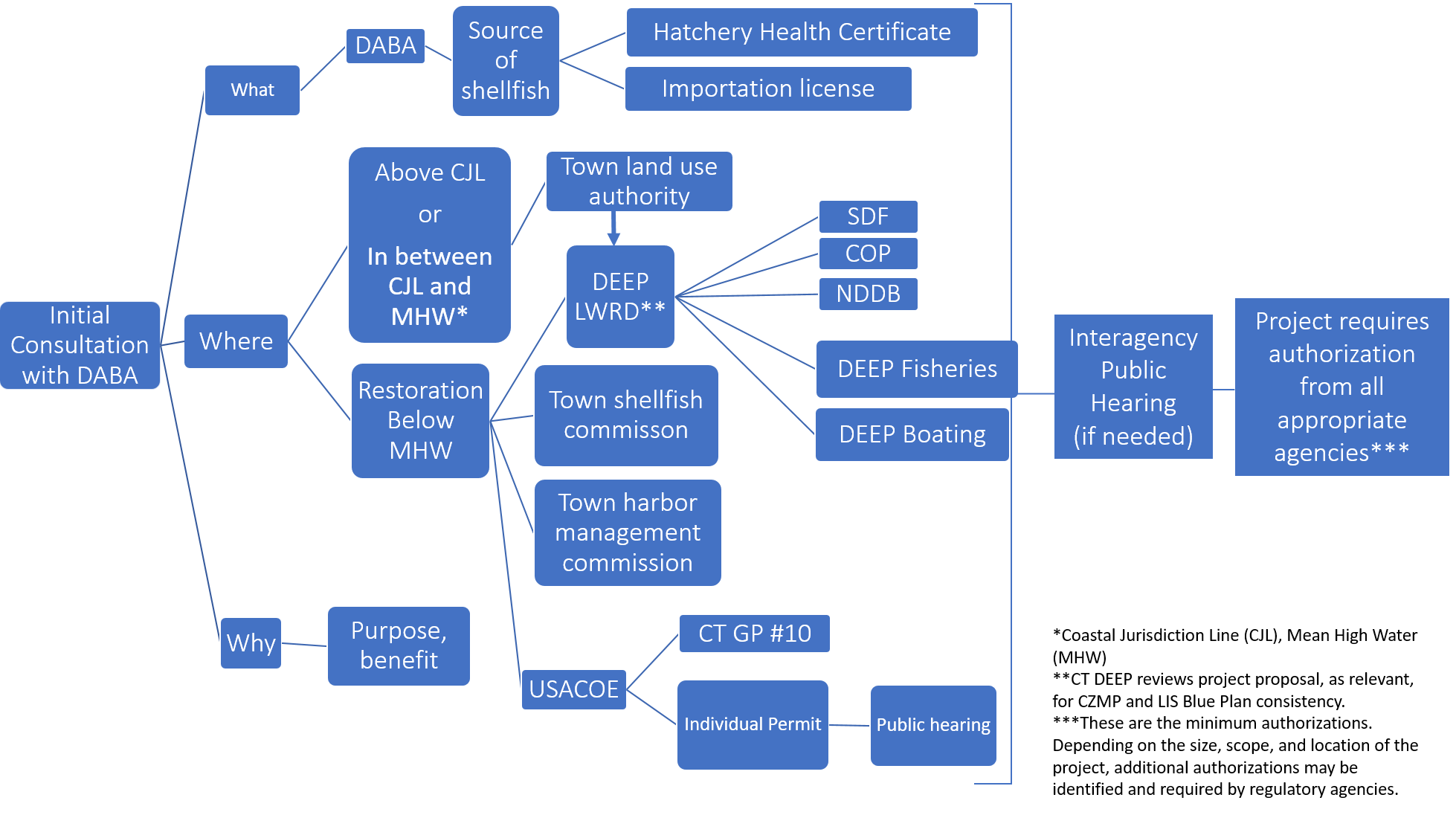
Shellfish Restoration Regulation Flowchart
Natural Oyster Seed Beds
Definition and Map of Natural Oyster Seed Beds
Shell Recovery and "Recycling"
Shell Recovery Guidance - August 2024
DEEP-DOAG Shell Recovery Memorandum of Understanding (MOU)
Oyster Habitat Restoration Application
Types of Aquaculture
Limited Purposes Aquaculture Licenses (LPA's)
In Connecticut, Limited-Purpose Aquaculture Licenses (LPA’s) offer a simple, affordable way to farm seaweed like kelp on a small scale. Each LPA site can be up to five acres and is typically issued for up to five years. The cost is low—just $25 per acre per year—and the fee can be waived if the site overlaps with an existing shellfish lease.
LPA’s are ideal for those piloting new aquaculture projects or exploring low-impact farming. The Connecticut Bureau of Aquaculture manages the process, requiring applicants to submit site plans and coordinate with local harbor and shellfish commissions. Additional approvals from DEEP or the Army Corps of Engineers may sometimes be needed.
LPA’s encourage sustainable aquaculture by making it accessible, supporting innovation, and allowing for shared use of coastal waters. They’re a great starting point for anyone interested in Connecticut’s growing marine farming industry..
"Experimental" (Limited Purpose) Lease
The Experimental (Limited-Purpose) Aquaculture Lease offers a flexible, supportive option for individuals and organizations looking to explore new aquaculture technologies and species in Connecticut’s coastal waters. By balancing innovation with environmental protection and community input, this lease type helps advance the state’s marine farming industry responsibly and sustainably.
Standard Lease
In Connecticut, a Standard Aquaculture Lease is a formal, longer-term agreement that grants the leaseholder exclusive rights to use a designated area of submerged state-owned waters for commercial aquaculture. These leases typically cover larger areas than limited-purpose or experimental leases and are intended for full-scale cultivation of shellfish, seaweed, or other marine organisms.
Standard leases usually last for multiple years (often up to 20 years) and require a detailed application, environmental review, and coordination with state agencies and local commissions to ensure compatibility with navigation, public use, and environmental protection. Leaseholders are responsible for managing their site sustainably while complying with all regulations.
This lease type supports Connecticut’s commercial aquaculture industry by providing secure, exclusive access to grow and harvest aquatic crops on a larger scale..